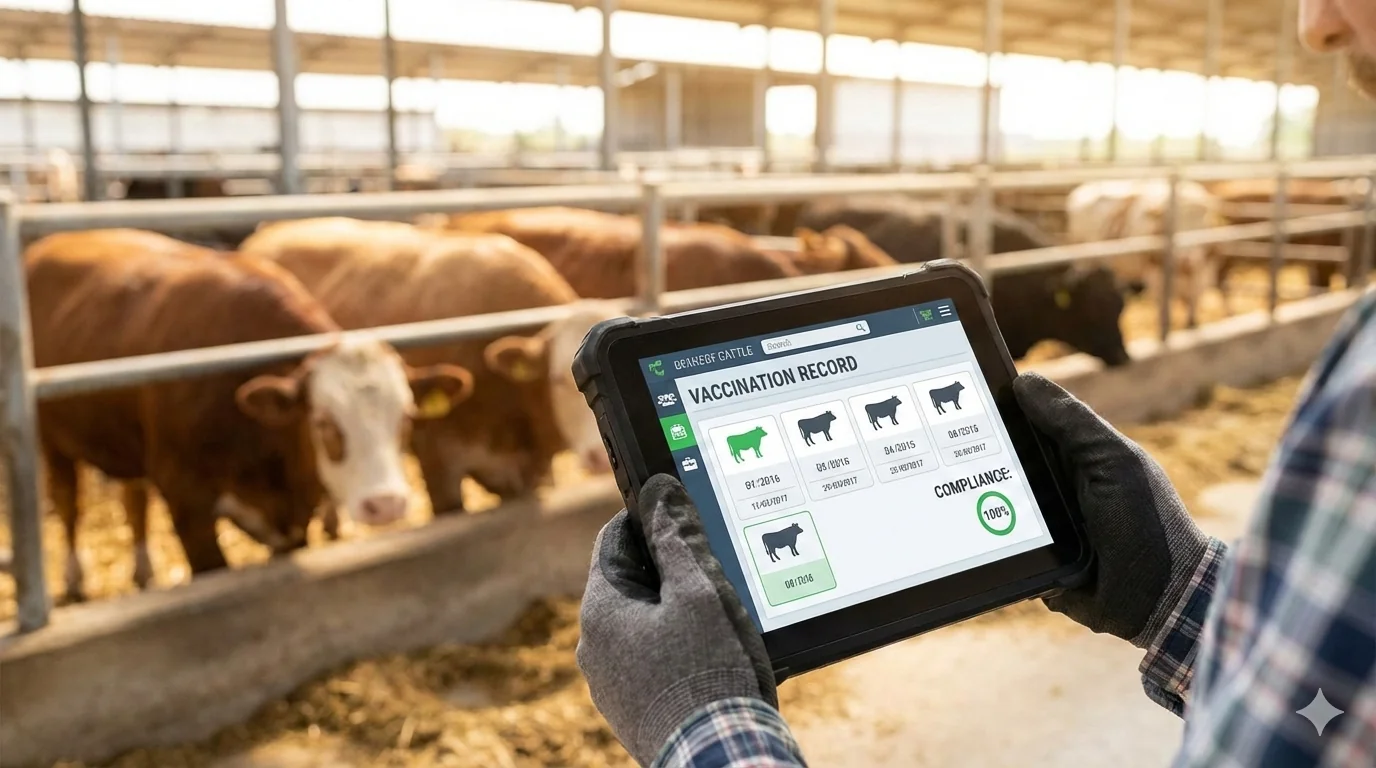
Cattle Health Monitoring Software: How to Detect Disease Early and Protect Herd Profitability
- Cattly Editorial Team
- 07 Mins read
Disease does not wait for office hours. In most cattle operations, health issues begin quietly: a slight appetite drop, slower gain, reduced activity, mild respiratory signs. By the time symptoms become obvious, treatment costs are higher, performance is lower, and losses are harder to recover.
That is exactly why cattle health monitoring software has become a high-priority investment for modern ranches and feedlots. It replaces fragmented paper notes and memory-based decisions with real-time, searchable, audit-ready health intelligence.
In this guide, you will learn what livestock health monitoring software should do, which features matter most, how to compare platforms, and how to implement a system that improves herd outcomes without adding admin chaos.
What Is Cattle Health Monitoring Software?
Cattle health monitoring software is a digital platform built to track individual and herd-level health status from prevention through treatment and recovery.
Unlike a basic spreadsheet, it connects critical workflows in one place:
- Animal ID and history
- Symptoms and diagnosis logs
- Vaccination schedules and boosters
- Treatment records and medication details
- Automatic withdrawal period calculations
- Follow-up checks and outcomes
- Alerts, reminders, and risk flags
- Reporting for compliance and management decisions
For operations looking to reduce avoidable health losses, this software shifts health management from reactive to proactive.
Why Health Monitoring Software Matters
1) Earlier Disease Detection
Most costly cases are costly because treatment starts late. A strong herd health monitoring app helps teams detect early deviations before full outbreaks:
- Appetite decline in a pen
- Repeated mild fevers in a group
- Slower gain trend in specific cohorts
- Rising treatment frequency by source lot
When these signals are visible early, intervention is faster and less expensive.
2) Better Treatment Accuracy
Paper records often miss critical details (dosage, lot numbers, route, timing). Software standardizes treatment execution:
- Protocol templates by condition
- Required fields before saving treatment
- Dose and schedule consistency
- Follow-up reminders to close the loop
3) Compliance Protection
Withdrawal mistakes are expensive and avoidable. Digital systems reduce risk with automated withdrawal tracking and shipment flags.
For operations managing medication-heavy periods, this is one of the highest-value features.
4) Measurable Financial Impact
Health software affects core profit levers:
- Lower treatment cost per head
- Lower death loss
- Better growth consistency
- Fewer chronic underperformers
- Reduced compliance penalties
Use the Livestock Break-Even Calculator to quantify how health-related cost changes impact margin.
Common Failure Points in Paper-Based Health Tracking
If your team is still on notebooks, whiteboards, and scattered spreadsheets, these issues are likely already happening:
Missed Follow-Ups
A treatment is given, but recheck timing is forgotten. Outcome tracking breaks, and unresolved cases linger.
Incomplete Medication Records
No lot number, unclear dosage, or missing administrator data creates audit and liability exposure.
Delayed Team Communication
One person knows a calf was treated; the next shift does not. Duplicate dosing or missed doses become more likely.
Withdrawal Risk at Sale Time
Without automated calculations, shipping mistakes can happen under pressure.
No Trend Visibility
You can log events on paper, but you cannot easily identify recurring risk patterns by pen, season, source, or protocol.
If you are comparing manual vs digital workflows, read: Digital vs. Paper - Managing Veterinary Records for Your Cattle Operation.
Must-Have Features in Cattle Health Monitoring Software
Not all tools are built for real operational pressure. Prioritize these capabilities when evaluating options.
1. Individual Animal Health Profiles
Each animal should have a complete longitudinal record:
- Health events and symptoms
- Treatments and outcomes
- Vaccination history
- Weight and growth context
- Reproductive milestones (if relevant)
This becomes the single source of truth during emergencies and audits.
2. Vaccination and Preventive Protocols
Strong prevention workflows include:
- Schedule templates by age/group
- Booster reminders
- Coverage reports by pen/cohort
- Exception lists for missed doses
Related deep dive: Cattle Vaccination Record Software - Digital Tracking for Herd Health & Compliance.
3. Treatment + Withdrawal Automation
A high-quality cattle treatment records software workflow should provide:
- Medication catalog with protocols
- Dose and route logging
- Milk/meat withdrawal calculations
- Automated “do not ship” warnings
This is a direct safeguard against financial loss and compliance violations.
4. Alerts and Health Task Management
Health outcomes improve when nothing is left to memory. Use:
- Follow-up reminders
- Overdue check dashboards
- Escalation alerts for unresolved cases
- Daily action lists for each team member
5. Mobile + Offline Access
If your team cannot use it in the chute, parlor, or remote pasture, adoption fails.
Look for:
- Full offline entry
- Fast sync when online
- Touch-friendly workflows
- Quick animal lookup by ID/tag
For broader mobile options, see: Free Cattle Record Keeping App - Best Options for Ranchers.
6. Performance Integration (Health + Growth)
Health data becomes more valuable when connected to gain and feed efficiency.
Useful linked metrics include:
- ADG before/after treatment
- Pen-level morbidity vs gain trend
- Cost of illness per pound of gain
Use these tools to support that analysis:
Best Cattle Health Monitoring Software Options
Below is a practical comparison for operators evaluating best cattle health monitoring software tools.
1) Cattly — Best Free All-in-One Option
Best for: ranches and feedlots wanting complete health workflows without subscription costs
Why it stands out:
- 100% free with unlimited animals
- Treatment and vaccination tracking in one system
- Withdrawal alerts and compliance-focused logs
- Offline-capable mobile workflow
- Links health records with growth/performance context
Strengths:
- Excellent value (no paywall for core functions)
- Fast onboarding for teams moving off paper
- Useful for both small farms and scaling operations
Consideration:
- Some enterprise-specific integrations may still depend on roadmap priorities
2) CowManager — Sensor-Driven Monitoring Focus
Best for: operations prioritizing wearable sensor-based health/activity monitoring
Typical strengths:
- Real-time behavioral signals
- Early anomaly detection workflows
- Useful for high-frequency health observation environments
Considerations:
- Hardware dependency affects total cost
- Sensor ecosystems can require process changes for full value
3) AgriWebb — Operations + Compliance Workflows
Best for: teams needing broader ranch operations tooling with health modules
Typical strengths:
- Multi-user workflows
- Record standardization
- Operational reporting and traceability
Considerations:
- Feature depth for health-only use cases varies by setup
- May include broader modules some smaller teams do not need
4) CattleMax — Detailed Recordkeeping Depth
Best for: operations that want highly detailed records and configurable data fields
Typical strengths:
- Strong history depth and reporting
- Flexible records for long-term herd management
Considerations:
- Learning curve can be higher for teams that need fast mobile-first adoption
5) Herdwatch — Mobile Simplicity for Daily Logging
Best for: teams that value quick field entry and straightforward mobile use
Typical strengths:
- Easy-to-use app experience
- Practical for routine treatment and task logging
Considerations:
- Advanced analytics needs may require additional tooling depending on operation complexity
Quick Comparison: What Actually Matters
| Capability | Why It Matters | Cattly | Typical Paid Tools |
|---|---|---|---|
| Offline field logging | Prevents missed entries in low-connectivity areas | ✅ | Usually ✅ |
| Withdrawal automation | Prevents shipment/compliance mistakes | ✅ | Usually ✅ |
| Vaccination + treatment in one workflow | Reduces fragmented records | ✅ | Varies |
| Unlimited animals/users | Keeps costs predictable as you scale | ✅ Free | Often tier-limited |
| Health + performance linkage | Helps quantify treatment ROI | ✅ | Varies |
| Cost to start | Impacts adoption speed | $0 | Subscription/per-head |
If your priority is a fast, low-risk shift from paper with strong health coverage, Cattly is usually the most practical starting point.
High-Value Use Cases for Health Monitoring Software
BRD and Respiratory Monitoring in Feedlots
Digital symptom + treatment timelines help teams isolate trends earlier and compare protocol outcomes over time.
Preconditioning and Vaccination Programs
Software improves execution consistency across groups and catches booster gaps before they become herd-level risk.
Calf Health Tracking
Youngstock are highly sensitive to delay and inconsistency. Structured digital checks improve survival and long-term performance.
Seasonal Risk Period Management
During stress windows (weather shifts, transport, weaning), software-driven alerts reduce missed checks and protocol drift.
How to Track Cattle Health Records (Step-by-Step)
If your team is searching for how to track cattle health records, use a repeatable workflow rather than trying to digitize everything at once.
Step 1: Standardize Required Health Fields
Create one required template for every health event:
- Animal ID and group/pen
- Symptom onset date and observations
- Diagnosis and severity
- Treatment details (drug, dose, route, lot number)
- Withdrawal period and release date
- Follow-up date and final outcome
Step 2: Log Events in Real Time
The biggest source of bad data is delayed entry. Record symptoms and treatments at chute-side or in the parlor using mobile entry, even when offline.
Step 3: Review Weekly Health Trends
Every week, review:
- New cases by condition
- Retreatment rates
- Overdue follow-ups
- Group-level morbidity changes
This turns raw records into management decisions instead of historical notes.
Step 4: Link Health Data to Performance
Compare health events against gain and feed efficiency to identify hidden costs. Use Cattle ADG Calculator and Feed Conversion Ratio Calculator to quantify impact.
Implementation Plan: Move from Paper to Digital in 30 Days
Week 1: Setup and Baseline
- Create account and farm structure
- Import active animals only
- Add medication library and protocols
- Define core health event categories
Week 2: Daily Logging Discipline
- Start live symptom and treatment logging
- Assign responsibility per shift/team role
- Enable reminders for follow-ups and boosters
Week 3: Compliance and Reporting
- Validate withdrawal workflows
- Run first weekly health report
- Audit missing fields and data quality gaps
Week 4: Optimization
- Identify top recurring conditions by group/season
- Compare treatment outcomes by protocol
- Set monthly review cadence for herd health KPIs
If breeding and calving planning are part of your health workflow, use Cattle Gestation Calculator and see How to Calculate Cattle Gestation and Predict Calving Dates.
KPI Dashboard: Metrics to Track Every Month
Your software should make these metrics visible without manual spreadsheet work:
Core Health KPIs
- Morbidity rate by pen/group
- Mortality rate by category
- Treatment success rate (first protocol)
- Average days to recovery
- Retreatment rate
Compliance KPIs
- Withdrawal incidents avoided
- Missing record fields
- Overdue follow-up tasks
- Vaccination coverage by cohort
Performance Impact KPIs
- ADG difference: treated vs non-treated groups
- Feed conversion impact after health events
- Cost per health event by condition
- Profit-per-head change after protocol improvements
For growth-linked analysis, combine health logs with Average Daily Gain (ADG): How to Measure & Improve It for Maximum Feedlot Profits and Cattle Weight Tracking Software - Monitor Growth & Maximize Profits.
Final Recommendation
If your team is still relying on manual records, adopting cattle health monitoring software is one of the fastest ways to reduce preventable losses and improve decision quality.
For most operations, the best move is to start with a platform that is:
- easy to adopt in the field,
- strong on treatment and withdrawal workflows,
- mobile and offline capable,
- and affordable enough to scale.
Cattly fits that profile well because it removes the usual pricing barrier while still providing complete health, compliance, and performance workflows.
If you want to evaluate capabilities before signup, review Cattly Features and Cattly Pricing.
Related Resources
Frequently Asked Questions
What is cattle health monitoring software?
Cattle health monitoring software is a digital system that tracks symptoms, treatments, vaccinations, withdrawal periods, temperature trends, weight changes, and herd-level risk indicators. It helps producers catch disease earlier, improve treatment outcomes, and maintain complete compliance-ready records.
Why is cattle health monitoring software important for ranches and feedlots?
It prevents expensive delays in treatment by identifying health problems earlier, reduces death loss, improves average daily gain, and eliminates recordkeeping gaps that can cause compliance failures. It also gives teams a shared, real-time view of animal status.
Can health monitoring software work without internet in the field?
Yes. The best cattle health monitoring platforms provide offline mobile apps so ranchers can log symptoms and treatments in remote pastures. Data syncs automatically when connectivity returns.
What records should cattle health software track?
At minimum, track animal ID, symptoms, diagnosis, treatment protocol, medication lot and dose, administration date/time, withdrawal periods, follow-up checks, vaccination history, and outcome notes. These records support both herd health decisions and regulatory audits.
How does cattle health monitoring software improve profitability?
It lowers treatment and mortality costs through earlier detection, protects sale eligibility with withdrawal tracking, improves growth performance by reducing chronic illness, and provides reports that identify high-risk groups and recurring health issues.
Is free cattle health monitoring software available?
Yes. Cattly offers free cattle health monitoring software with unlimited animals, treatment logs, vaccination tracking, withdrawal alerts, and mobile offline access. Many other tools charge annual subscriptions or per-animal fees for similar capabilities.
Can I use cattle health monitoring software for both beef and dairy operations?
Yes. Most modern platforms support both beef and dairy workflows, including vaccination protocols, treatment records, reproductive health tracking, and performance analytics. The best solution depends on your operation size and management style.
How long does it take to switch from paper to digital health tracking?
Most operations can transition in 2-4 weeks. Start with active animals and recent treatments, then standardize daily logging routines. You do not need to backfill years of paper records to get immediate value.
Ready to Stop Losing Records?
Join 500+ ranchers managing healthier herds with free cattle management software. No credit card — just better records.