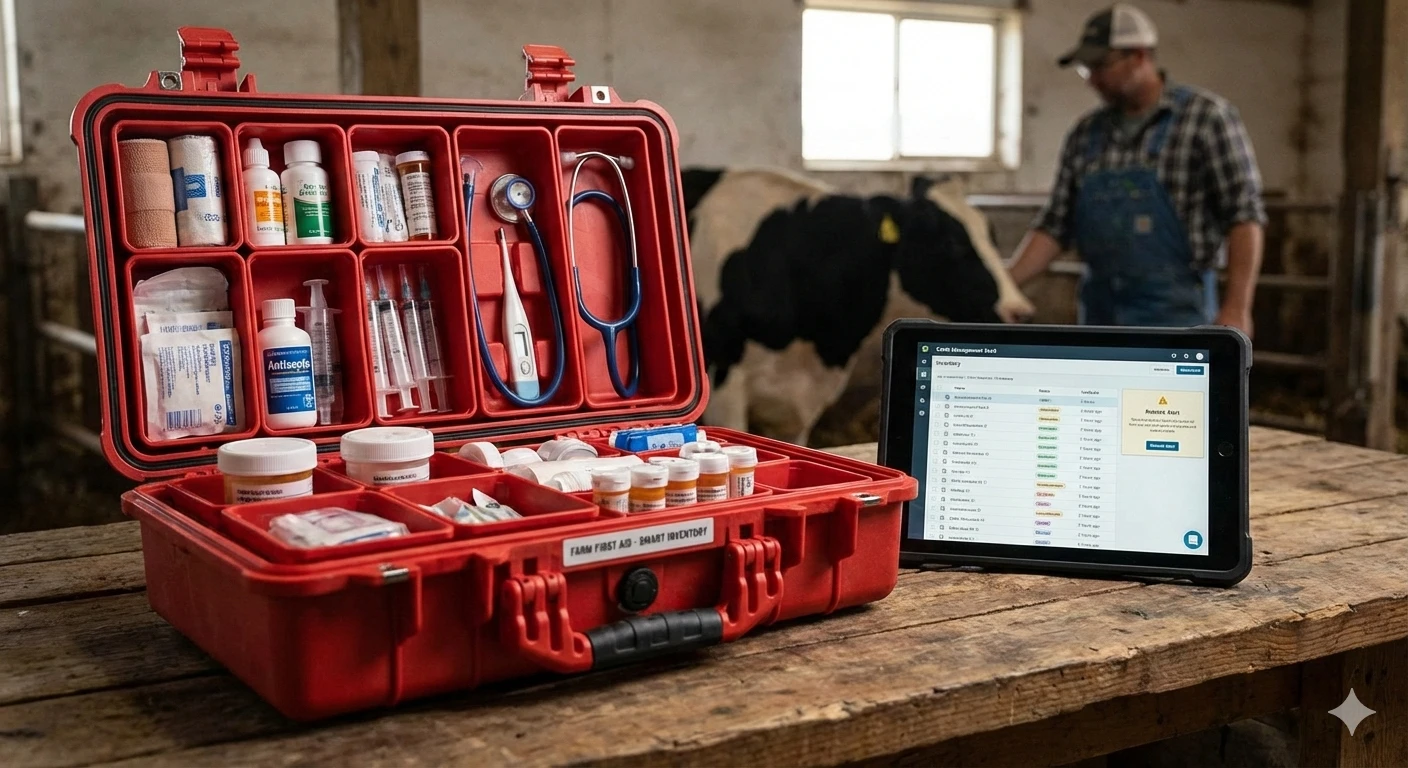
Emergency Kit Essentials for Every Livestock Farmer
- Cattly Editorial Team
- 06 Mins read
A well-stocked veterinary emergency kit isn’t just a good idea—it can straight-up save your cattle’s life. Anyone who has spent more than a week raising livestock knows that emergencies rarely happen on a sunny Tuesday afternoon. They happen during a blizzard, at 2 AM, on a holiday. Having the right medical supplies organized and ready to go means you can handle sudden illnesses or stabilize an injured animal before the vet pulls into the driveway.
This guide isn’t just another boring checklist. It’s a practical, real-world look at everything you need in your livestock emergency kit, plus some hard-earned advice on keeping track of it all so you aren’t digging for an expired bottle of penicillin in the dark.
Why You Actually Need a Livestock Emergency Kit
Let’s be real: veterinary emergencies don’t wait for business hours. When a calf develops scours on a Sunday morning, you need to act fast. A properly maintained livestock first aid kit gives you the power to:
- Respond immediately to life-threatening conditions (because minutes matter)
- Stabilize animals while you wait for professional veterinary help
- Reduce stress and suffering with fast, effective pain management
- Stop infections in their tracks through quick wound care
- Stay out of trouble by keeping up with strict antibiotic withdrawal periods
The difference between having your supplies ready versus frantically rummaging through the barn can literally be the difference between life and death.
The Non-Negotiable Medical Supplies for Your Farm
1. Injection Equipment & Syringes
What to keep on hand:
- Disposable Syringes: A mix of 3cc, 6cc, 12cc, and 20cc sizes
- Needles: 18-gauge and 20-gauge (stock both 1” and 1.5” lengths)
- Automatic Syringes: A lifesaver for herd vaccinations (go for a 50cc capacity)
- Sharps Container: Please don’t throw needles in the regular trash
Why it matters: Different medications call for different needle sizes and syringe volumes. Having a solid variety prevents you from trying to push thick antibiotics through a tiny gauge needle while a cow is jumping around.
Pro tip: Accurate dosing starts with knowing what your animal actually weighs. If you don’t have a scale handy, use our free Cattle Weight Estimator to make sure you’re getting the dose right.
2. Antibiotics & Anti-Inflammatories
The heavy hitters (always consult your vet first):
- Penicillin: The classic, reliable broad-spectrum antibiotic
- LA-200 (Oxytetracycline): Your go-to for respiratory issues and pinkeye
- Excenel RTU: Fantastic for tackling foot rot and pneumonia
- Banamine (Flunixin Meglumine): Crucial for dropping fevers and managing pain
- Dexamethasone: Essential for reducing severe inflammation and treating shock
Storage tip: Keep temperature-sensitive meds in the fridge. Check those expiration dates every month—an expired antibiotic isn’t doing you or your animals any favors.
3. Wound Care Supplies
The must-haves for cuts and scrapes:
- Antiseptic Spray: Betadine or Chlorhexidine for washing out wounds
- Wound Powder: Blood stop powder is magic for halting bleeding fast
- Bandaging: Stock up on gauze pads, cotton rolls, and plenty of Vet Wrap
- Fly Repellent: Wound sprays with fly control to keep maggots far away
- Saline Solution: Sterile water for flushing dirt out of eyes or deep cuts
When you’ll use it: Lacerations from a broken fence, dehorning mishaps, and hoof injuries all need immediate cleaning to ward off nasty infections.
4. Digestive & Metabolic Emergency Supplies
The literal life-savers:
- Bloat Relief: Poloxalene, vegetable oil, or a trocar (if things get truly desperate)
- Electrolytes: Powder or liquid to rehydrate scouring calves fast
- Calcium Gluconate: IV or subcutaneous treatment for milk fever
- Propylene Glycol: An oral drench to get ahead of ketosis
- Activated Charcoal: To absorb toxins if you suspect they ate something poisonous
The hardware:
- Stomach Tube: Get both calf and adult sizes (you can’t fight severe bloat without one)
- Drench Gun: For giving oral medications without wearing them
5. Obstetric & Calving Equipment
Your calving season survival kit:
- OB Chains & Handles: Stainless steel is the only way to go for easy sanitation
- Calf Puller (Calf Jack): Worth its weight in gold for difficult extractions
- OB Lubricant: Buy the high-viscosity gel or powder, and buy plenty of it
- OB Sleeves: Shoulder-length disposable gloves (trust me on this)
- Iodine (7%): For dipping navels the second the calf hits the ground
- Colostrum Replacer: Keep high-quality powder on hand for calves that won’t nurse
Insight: Even if you’ve been calving out cows for 20 years, you need backup gear. When a calf is stuck, you don’t have time to run to town.
Want to feel a little more prepared? Manage your calving season with our Cattle Gestation Calculator so you know exactly when to have this kit ready.
6. Diagnostic & Examination Tools
The basics for figuring out what’s wrong:
- Digital Thermometer: Remember, normal cattle temperature is around 101.5°F
- Stethoscope: Handier than you’d think for checking lung sounds and rumen activity
- Headlamp: Because you need both hands free when working in the dark
- Hoof Knife & Nippers: For digging out abscesses and dealing with foot rot
- Balling Gun: The easiest way to get boluses down a cow’s throat
7. Vaccines & Preventive Medications
The core vaccines you shouldn’t skip:
- 7-Way or 8-Way Clostridial: Your standard “Blackleg” shots
- Viral Respiratory: IBR, BVD, PI3, BRSV
- Scours Vaccines: Pre-calving shots to protect the babies through the dam
Keep an eye on the fridge: Vaccines are incredibly picky about temperature. Monitor your fridge and write down batch numbers so you have a trail if something goes wrong.
By the way, keeping your cattle healthy is how you keep them growing. See how regular health management affects your bottom line in our guide to Average Daily Gain (ADG).
Organizing Your Farm Medical Inventory
Create “Zones” So You Can Find Things Fast
Zone 1: The ‘I Need It Now’ Box What’s in it: Emergency injectables, bloat supplies, calcium. Where it goes: An easily accessible, climate-controlled spot like the farm office.
Zone 2: The Wound Care Station What’s in it: Antiseptics, bandages, blood stop powder. Where it goes: Right next to the chute or your main handling area.
Zone 3: The Calving Kit What’s in it: Chains, the puller, lube, colostrum. Where it goes: On a dedicated, clean shelf in the maternity barn.
Zone 4: The Cold Storage What’s in it: Vaccines, Penicillin, and temperature-sensitive antibiotics. Where it goes: In a dedicated farm fridge (please, no lunches in here).
Don’t Let Things Expire
Most livestock medications only last 12-24 months. Trying to stretch an expired product is a bad idea because:
- The medication might straight-up fail
- You could accidentally violate meat withdrawal periods
- You’ll fail an inspection if the regulatory folks show up
The Golden Rule: Walk through your inventory once a month. Reorder when you’re down to a 30-day supply, and toss the expired stuff immediately.
How Cattly Makes Tracking All This A Breeze
It’s time to ditch the muddy notepad and the messy spreadsheet. Cattly’s inventory tracking takes the headache out of managing your vet kit.
1. Digital Inventory That Actually Works
Track what you have, batch numbers, and quantities from a clean dashboard. No more guessing if you have enough Banamine while standing in the pasture.
2. Alerts Before You Run Out
Tell Cattly what your minimum stock levels should be, and the app will remind you to reorder before you’re staring at an empty shelf in a panic.
3. Integrated Health Tracking
When you record a treatment, Cattly automatically pulls that medication out of your inventory and figures out the withdrawal dates for you. It’s the ultimate peace of mind.
Thinking about making the switch? Take a look at our quick guide on Getting Started With Cattly to see how painless it is to get your farm set up.
4. Know Where Your Money is Going
Figure out exactly what you’re spending on vet care. Analyze your costs per head or per issue so you can budget better next year.
5. It Works Where You Work
Update your inventory right from your phone at the chute. It works offline and syncs back up when you get cell service again.
Your Monthly First Aid Checklist
Don’t let an emergency be the moment you realize you’re out of needles.
Pick a day (like the 1st of the month) and check these off:
- ✅ The Expiration Check: Toss and replace anything expiring within the next 60 days.
- ✅ The Count: Make sure you have enough of the critical meds to handle an outbreak.
- ✅ The Fridge Check: Is it actually staying between 35°F and 45°F?
- ✅ The Needles & Syringes: Verify you have plenty of clean, unopened packs.
- ✅ The Gear Check: Make sure the calf puller’s ratchet works and your headlamp has batteries.
- ✅ The Sharps Bin: If it’s 3/4 full, it’s time to swap it out.
- ✅ The Phone Tree: Make sure you have your current vet’s emergency number pinned up.
What to Do Next
Don’t just close this tab. Take these three steps right now:
- Do an audit today - Go look in your vet box. What’s sitting in there? What’s expired?
- Make your shopping list - Use this post to figure out what you’re missing.
- Get your tracking sorted - Start managing your supplies so you don’t have to do this again next month.
Being prepared isn’t an option—it’s just part of the job. Every single day you operate without a fully-stocked vet kit is a massive risk.
Start Tracking with Cattly
Say goodbye to lost medications, missed expiration dates, and 2 AM panics.
With Cattly, you get:
- ✓ Digital records for every bottle and bandage
- ✓ Automatic alerts before things expire
- ✓ Low stock reminders so you can hit the farm store in time
- ✓ Built-in withdrawal period tracking
- ✓ An app that works right from your phone in the pasture
- ✓ And it’s 100% free. No credit card.
Start getting your inventory organized in Cattly →
Got questions about handling livestock emergencies? Reach out to our team or read up on our editorial policy to see how we verify our medical advice.
Still writing things down on paper? Take a look at Digital vs. Paper Record Keeping to see why an app is a much safer bet for your emergency protocol.
Last updated: March 12, 2026 • As always, this information is based on general FDA/USDA guidelines, but your local vet should be your ultimate resource.
Frequently Asked Questions
What is the most important item in a livestock emergency kit?
While it depends on the situation, **pain relief (like Banamine)** and **antibiotics (like Penicillin)** are often considered most critical for immediate disease management, along with **calving equipment** during calving season. A specialized **stomach tube** is also irreplaceable for saving bloated cattle.
How do I store livestock vaccines properly?
Vaccines must be kept in a **refrigerator between 35°F and 45°F (2°C - 7°C)**. Never freeze them (unless specified) and avoid storing them in the door where temperature fluctuates. Always transport them in a cooler with ice packs.
Can I use expired animal antibiotics in an emergency?
**No.** Expired antibiotics lose potency, meaning they may not treat the infection effectively, leading to antibiotic resistance or treatment failure. Some can even become toxic. Always dispose of and replace expired medications.
How often should I check my farm first aid kit?
We recommend a **monthly audit**. Pick a consistent day (e.g., the 1st of every month) to check expiration dates, restock disposables, and verify equipment functionality.
Ready to Stop Losing Records?
Join 500+ ranchers managing healthier herds with free cattle management software. No credit card — just better records.